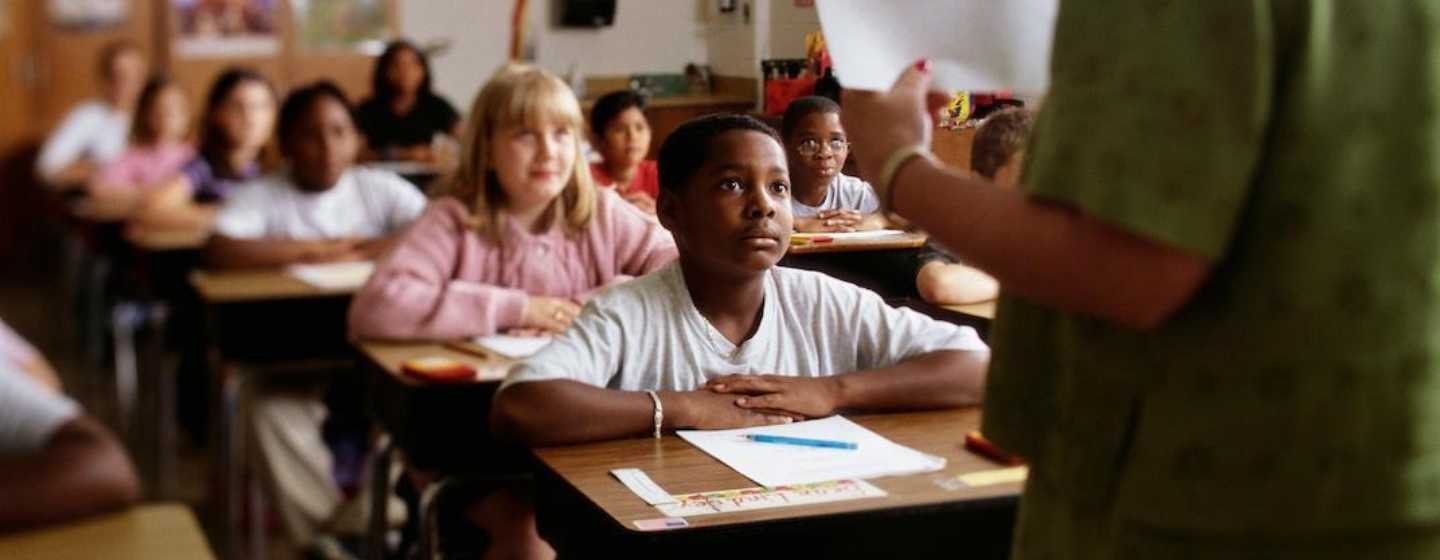
Future teachers interpret Black children's expressions as angry when they aren't
Research from North Carolina State University found that teachers-in-training are more likely to perceive Black children as being angry compared to white children, even when they aren’t expressing anger.
The study’s participants reflected the demographics of American teachers today: 89 percent female and 70 percent white. The participants watched 72 short clips of child actor’s expressions, and identified the emotion expressed in each.
Researchers relied on an expression coding system to ensure that each clip displayed a “pure emotion,” without multiple expressions spilling into each other.
Scientists were looking for where teachers made mistakes. Their results show that teachers were 1.36 times more likely to interpret a Black child’s face as angry when they weren’t actually making an angry expression.
Teachers have the power to discipline
“Teachers have a large influence on children, and the power to discipline,” said Amy Halberstadt, Ph.D, study author and professor of psychology at North Carolina State University. “And if they are seeing a threat to their authority, even when there isn’t one, that could have real consequences for children.”
Black children are three times more likely to be expelled than white children, and three times more likely to be referred to police for incidents occurring on school grounds, according to research published in the Proceedings of the National Academy of Sciences.
Those disparities lead to a number of negative outcomes for Black children, including involvement in the criminal justice system.
The participants also took an implicit and explicit bias test. Those with higher levels of bias were less likely to correctly interpret white children’s angry expressions—essentially, they were more likely to give white children a “free pass” even when they were exhibiting anger.
“The results are striking,” said Kurt Hugenberg, Ph.D, researcher and professor of Psychological and Brain Sciences at Indiana University Bloomington, who was not involved in the study.
“The study shows that biases really matter. Seeing children as angry is particularly problematic. We find ourselves amidst a national debate about whether we should use harsh disciplinary actions or even police presence to regulate students’ behavior. Insofar as teachers see Black students as angrier than their White counterparts, this may elicit more punitive discipline for those Black students,” he said.
Checking our bias in the moment
Halberstadt said that although many of us have taken bias tests, it’s helpful to know the specific ways that bias can show up in our daily lives.
“Teachers have lots of things going on, there’s kids jumping around, they may be on edge,” she said. “This knowledge could help give them ask themselves, ‘Am I seeing things that are really happening, or is my bias activating my sense that this child is threatening in some way?’”
The research was published in the journal Emotion.