New Discoveries Along the Cape Fear River
I’m paraphrasing a bit, but archaeology is the scientific study of human history and prehistory through the excavation of sites and analysis of artifacts and other physical remains. (Here’s the formal definition.)
And here’s the challenge: what if potential excavation sites are underwater?
That’s what has happened at Brunswick Town, which was established in 1726 as North Carolina’s colonial seat of government. What’s now known as Brunswick Town/Fort Anderson (BTFA) State Historic Site in Winnabow was a major prerevolutionary port along the Cape Fear River. It was demolished by British troops in 1776 and never rebuilt. During the Civil War, Fort Anderson was built atop the old village site. The fort was incorporated as part of the Cape Fear River defenses below Wilmington before the fall of the Confederacy.
It’s safe to say there’s been a lot going on in this area, but state archaeologists say only about a quarter of Brunswick Town has been explored. That’s why state officials believe two federal grants to the historic site will help researchers better understand how important the area was to the nation and state.
The National Oceanic and Atmospheric Administration (NOAA) has awarded the North Carolina Department of Natural and Cultural Resources (DNCR) a $2.5M grant for shoreline restoration and resiliency. The National Park Service (NPS) has also awarded DNCR a $75,000 grant to perform an archaeological assessment.
“Not since the archaeological investigations of Stanley South in the 1960s has a comprehensive assessment at the colonial capital and port of Brunswick Town been possible,” said State Archaeologist Chris Southerly in a statement from DNCR. “With the modern tools and technology available, this grant will allow us to collect new and consistent data to better manage, steward, and protect this invaluable resource.”
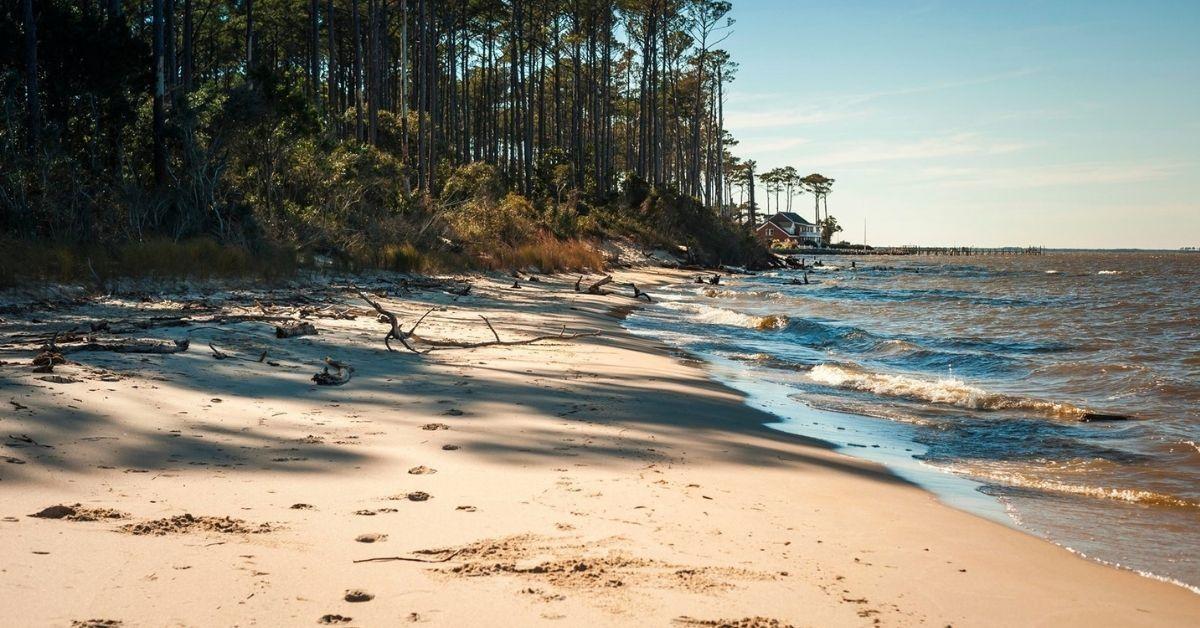
Historic site is eroding away
State archaeologists estimate the BTFA site has lost more than 12 acres of shoreline from erosion. Nobody knows what historic items were lost. Fortunately, since 2017, a living shoreline project has protected the area. That work has also become a national model for coastal resiliency. The NOAA grant will enable the state to continue with a project to build and install a system of wave attenuators, which are devices that reduce wave action, mitigate erosion and protect the shoreline.
“Particularly as we reflect on Brunswick Town’s complex and important role in the founding of this country, we are excited by the possibilities of what this full assessment may reveal,” added Michelle Lanier, director of North Carolina Division of State Historic Sites, in DNCR’s statement.
Recent finds reveal the coast’s past and hint at its future
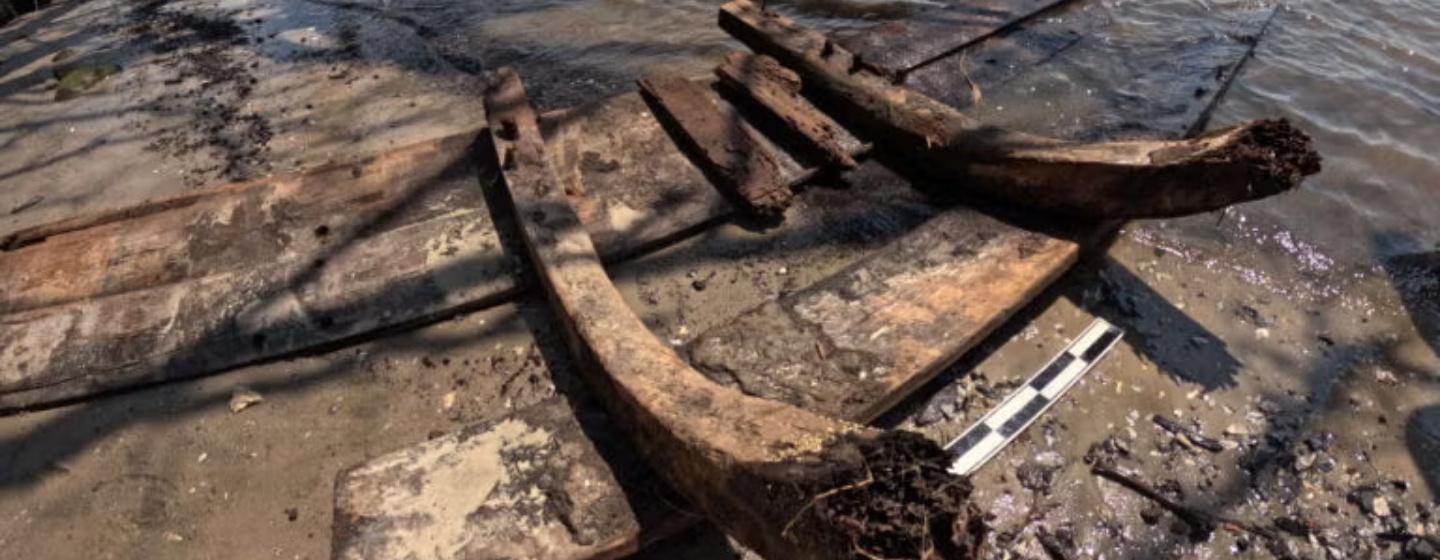
Recent discoveries show why the shoreline needs protection. Four shipwrecks—including the remains of what is believed to be a 1748 Spanish privateer ship—were found at the historic site by archaeologists from East Carolina University (ECU)’s maritime studies program.
The team was investigating and collecting samples from several wood frames sticking out of the clay near the shore. While further study is needed, it’s believed to be the remains of La Fortuna, a Spanish privateer from Cuba that exploded near the colonial wharves during an attack on the port at the end of King George’s War in 1748.
More than 60 pieces of timber were recovered and taken to ECU’s labs for study.
“We are extremely excited about these important sites, as each one will help us to better understand the role of BTFA as one of the state’s earliest colonial port towns,” said Jason Raupp, assistant professor in the department of history and maritime studies at ECU, in a statement announcing the discovery. “These submerged colonial waterfront features are incredibly well-preserved and present an excellent opportunity for ECU students to engage in hands-on, collaborative research.”
Who knows what additional history is waiting to be uncovered?
Learn how erosion from rising seas and strong storms is threatening another historic site in North Carolina in the blog below.